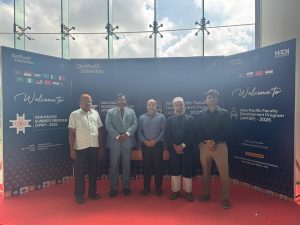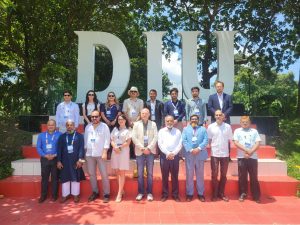
Daffodil International University Hosts Landmark Asia-Pacific Faculty Development Program 2026, Uniting Global Education Leaders to Reshape Higher Education
Three-Day Intensive Program Brings Together International Scholars from the United States, Australia, the United Kingdom, and Bangladesh to Advance Academic Leadership, Innovative Pedagogy, and Research Excellence
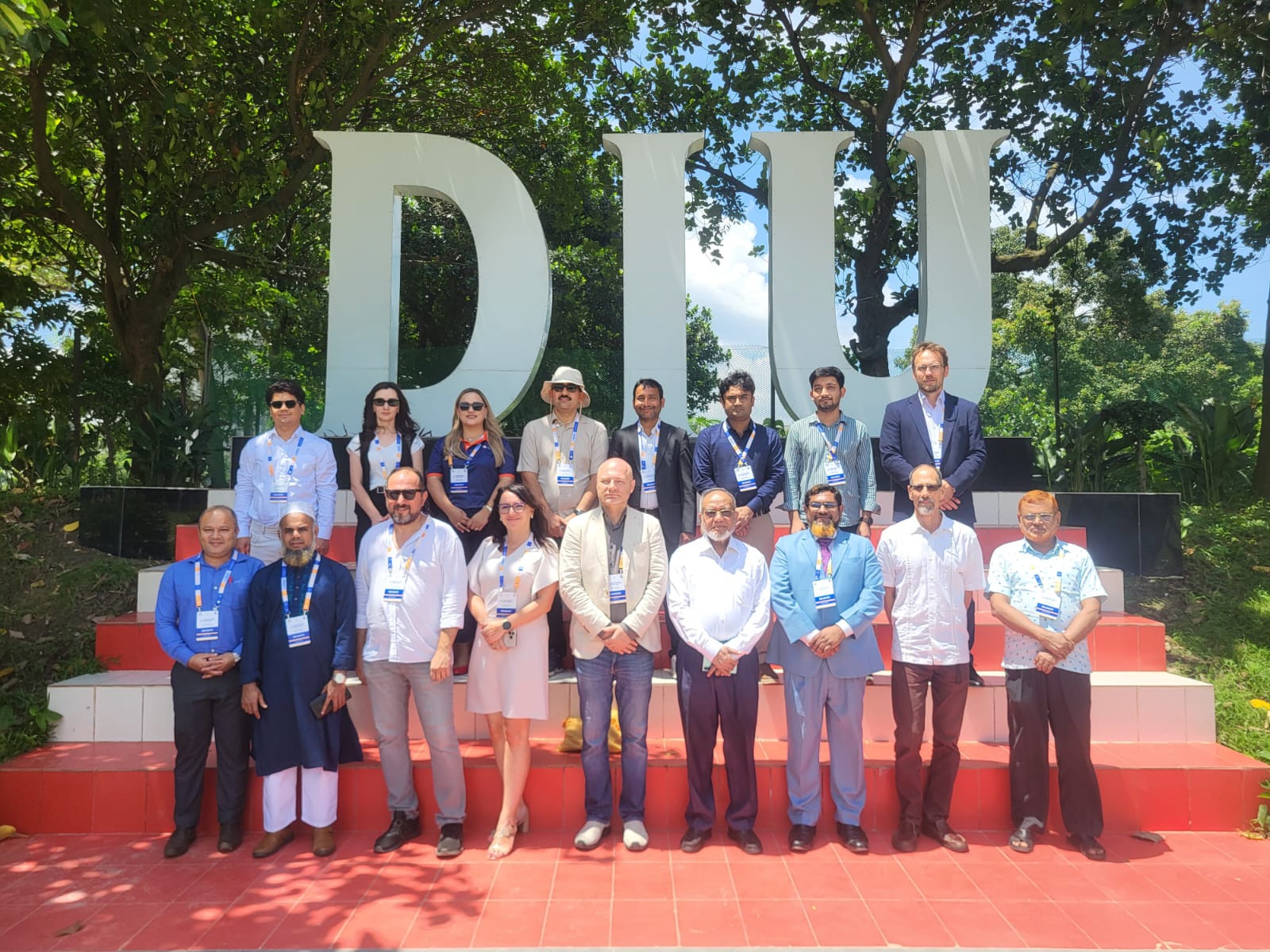
DHAKA, BANGLADESH — Daffodil International University (DIU) successfully concluded the inaugural Asia-Pacific Faculty Development Program (APFDP) 2026, a landmark three-day intensive program held from July 26 to 28, 2026, at the university’s Knowledge Tower campus in Daffodil Smart City, Dhaka. The program convened over 60 faculty members and academic leaders from institutions across Bangladesh and international partner universities for a rigorous series of sessions on academic leadership, innovative pedagogy, student-centered learning, and research excellence.
The APFDP 2026 was inaugurated by Professor Dr. M. R. Kabir, Vice Chancellor of Daffodil International University, with an address by Professor Mohammed Masum Iqbal, PhD, Pro Vice Chancellor of DIU. The program brought together an distinguished roster of international scholars and education leaders, including speakers from Purdue University Fort Wayne (USA), the University of Essex (UK), the University of Southern Queensland (Australia), Auburn University (USA), the University of Liberal Arts Bangladesh, Green University of Bangladesh, BRAC University, and the United States Department of State.
Day 1 — Academic Leadership, Project-Based Learning, and the Role of Research in University Identity
The opening day commenced with a comprehensive session on “Academic Leadership & University Governance” delivered by Professor Md. Golam Samdani Fakir, PhD, SFHEA, Director of the Learning and Teaching Innovation Center at BRAC University and former Vice Chancellor of Green University of Bangladesh. The session examined the critical distinction between leadership, management, and governance, emphasizing that sustainable university transformation requires visionary leaders who build trust, encourage participation, communicate transparently, and align governance systems with academic values.
Professor Samdani Fakir presented an Integrated Leadership and Governance Framework demonstrating that sustainable universities are not created through excellence in a single domain but through the deliberate integration of teaching excellence, research, innovation, community engagement, global partnerships, and societal impact — all aligned through purposeful academic leadership and sound governance. He stressed that “leadership without governance creates vision without accountability, while governance without leadership creates order without innovation.”
The second session, “Student Agency at Scale: Project-Based Learning for Classes of Any Size,” was delivered by Timothy Janda, an English Language Fellow with the U.S. Department of State, currently assigned to Shahjalal University of Science and Technology (SUST) in Sylhet, Bangladesh. Janda presented compelling evidence that students exposed to project-based learning curricula outperformed peers taught using traditional methods, citing research from Lucas Education Research. He demonstrated practical applications across all educational levels — from primary school through university — showcasing how project-based learning develops 21st-century skills including critical thinking, collaboration, communication, and self-management while creating tangible, meaningful student outcomes.
The day’s final session, “Why Research Matters for University Identity: The Role of Champion Teachers,” was led by Professor Jude William Genilo, Pro Vice Chancellor of the University of Liberal Arts Bangladesh (ULAB). Genilo posed a fundamental question: “What defines a university today — teaching, facilities, or employability?” He argued that without research, a university merely teaches what others discover, and that research defines institutional credibility, differentiation, teaching quality, societal impact, and global visibility. Genilo introduced the concept of “champion teachers” — faculty members who go beyond contractual responsibilities, consistently engage in research, mentor junior colleagues, collaborate across disciplines, and view research as integral to their academic identity.
Day 1 concluded with a networking boat trip and dinner along the Buriganga River, fostering informal collaboration among participants.
Day 2 — Case-Based Teaching, Student Mindset, and Classroom Engagement
The second day opened with an online session on “Case-Based Teaching Methods” presented by Soni Jha, PhD, of the Doermer School of Business at Purdue University Fort Wayne, and Dr. Rafia Afrin of the Essex Business School at the University of Essex, UK. The session explored case-based learning as a transformative pedagogical tool used by major universities worldwide, providing a comprehensive framework for writing and teaching with business cases. Jha and Afrin guided participants through the full case writing journey — from concept development and research to publication — emphasizing how cases bridge theory and practice, build critical thinking, and develop decision-making confidence among students.
Dr. Ahmed Mustafa, Professor and Director of the Life Sciences Resource Center at Purdue University Fort Wayne, delivered a deeply resonant session titled “Understanding Students’ Mindset and Becoming a Role Model for Them.” Mustafa opened with the powerful observation: “Students may forget what you taught, but they never forget how you made them feel.” He explored how modern students are digital natives facing unprecedented stress — academic pressure, anxiety, financial difficulties, and career uncertainty — and argued that faculty must evolve from lecturers to mentors. Mustafa distinguished between fixed and growth mindsets in students, providing practical strategies for shifting students from “I can’t do it” to “I can’t do it yet, but I will.” His framework for becoming a role model emphasized modeling visible vulnerability, sharing struggle stories, becoming a “warm demander,” and walking one’s own talk.
The afternoon session, “Student Engagement in the Classroom,” was delivered by Dr. Gregory John Simons, Professor of Journalism, Media and Communication at Daffodil International University. The session examined practical strategies for creating dynamic, inclusive, and engaging learning environments that respond to the needs of today’s diverse student populations.
Day 2 concluded with a guided city tour of Dhaka and shopping opportunities, allowing international participants to experience Bangladesh’s rich cultural heritage.
Day 3 — Artificial Intelligence, Research Excellence, and Industry Innovation
The final day began with a forward-looking session on “Artificial Intelligence in Education” presented by Dr. Imran Mahmud, Professor and Head of the Department of Software Engineering at Daffodil International University. The session explored the transformative potential of AI tools in higher education, introducing participants to cutting-edge platforms including NotebookLM, Research Rabbit, Elicit, Perplexity, and Claude, and demonstrating their practical applications in research, teaching, and academic productivity.
Professor Dr. Shahjahan Khan OAM, Emeritus Professor of the University of Southern Queensland (Australia) and former Vice Chancellor of the Asian University of Bangladesh, delivered a comprehensive presentation on “Achieving Research Excellence: The Contemporary Research Ecosystem for University Academics.” Professor Khan addressed the critical importance of research in the modern university landscape, emphasizing that research is essential for expanding the boundaries of knowledge, sharing new findings, influencing policy, building institutional profiles, attracting research funding, and enhancing institutional prestige. He presented detailed guidance on the research ecosystem — including ORCID registration, journal selection, impact factors, citation metrics, H-index, CiteScore, and the publication process — and called for a cultural shift in Bangladesh’s approach to research investment, noting that Bangladesh allocates only 0.03% of GDP to research and 1.8% to education.
The penultimate session, “Bridging Education and Industry Through Innovation,” was delivered by Dr. Timothy J. Bruce, Assistant Professor of Aquatic Animal Health at Auburn University’s School of Fisheries, Aquaculture and Aquatic Sciences. Drawing from the American land-grant university model established by the Morrill Act of 1862, Bruce presented a five-rung partnership ladder for integrating industry engagement into academic coursework — from simple guest lectures to sponsored research and technology transfer. He demonstrated how innovation emerges from a continuous loop: partner problems inform course content, student work generates research questions, and findings feed back into industry practice. Bruce provided a practical exercise guiding participants to identify one specific industry partner, one course, and one actionable first step for collaboration.
The program concluded with collaborative task presentations by participants, followed by a panel discussion on “Teach Like a Champion” moderated by Professor Dr. Mohammad Rokibul Kabir, Dean of the Faculty of Business and Entrepreneurship at Daffodil International University. The closing ceremony featured certificate awarding, cultural performances, and a gala dinner at the Students Lounge, Level 1, Knowledge Tower, DSC.
Participation from Bangladesh University of Business and Technology
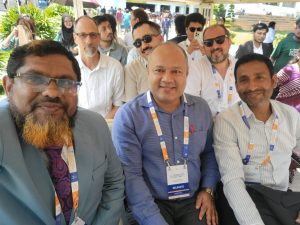
Five distinguished faculty members from the Bangladesh University of Business and Technology (BUBT) participated in the APFDP 2026, representing a strong commitment to professional development and institutional capacity building. The BUBT delegation included Mohammad Shawkat Ali, Associate Professor, Department of English; Dr. Md. Aslam Uddin, Associate Professor, Department of Marketing; Dr. Md. Asadur Rahman, Associate Professor, Department of Electrical and Electronic Engineering; Dr. Md. Rajibul Islam, Associate Professor, Department of Data Science and Engineering; and Professor Dr. Md. Ahsan Habib, Professor, Department of Computer Science and Engineering and Dean (Acting) of the BUBT Research Graduate School.
Program Themes and Outcomes
Across the three-day program, participants engaged with six interconnected thematic pillars that form the foundation of contemporary higher education excellence: (1) Academic Leadership and University Governance — emphasizing that effective universities require both visionary leadership and transparent, participatory governance; (2) Student-Centered Pedagogy — demonstrating that project-based learning, case-based methods, and experiential education produce deeper understanding and higher engagement than traditional approaches; (3) Research Excellence — establishing that research defines institutional identity, credibility, and global visibility, and that champion teachers play a decisive role in building research culture; (4) Student Mindset and Faculty as Role Models — affirming that great teachers shape futures, not just grades, and that authentic, caring, and resilient educators create lasting impact; (5) Artificial Intelligence in Education — exploring how emerging technologies can enhance teaching, research, and academic productivity; and (6) Industry-Academia Partnership — showing that innovation emerges when academic institutions build sustainable, reciprocal partnerships with industry and community organizations.
Professor Dr. M. R. Kabir, Vice Chancellor of Daffodil International University, stated: “The Asia-Pacific Faculty Development Program represents DIU’s commitment to fostering a vibrant academic community that transcends institutional and national boundaries. By bringing together world-class educators and dedicated faculty from across the Asia-Pacific region, we are building the capacity of our institutions to serve our students, our communities, and our nations with excellence and integrity.”
Professor Md. Golam Samdani Fakir, one of the program’s lead facilitators, remarked: “Sustainable universities are not created by policies alone. They are built by people — by champion teachers who lead by example, mentor the next generation, bring students into research, and create networks locally and internationally. This program has planted seeds that will bear fruit for years to come.”